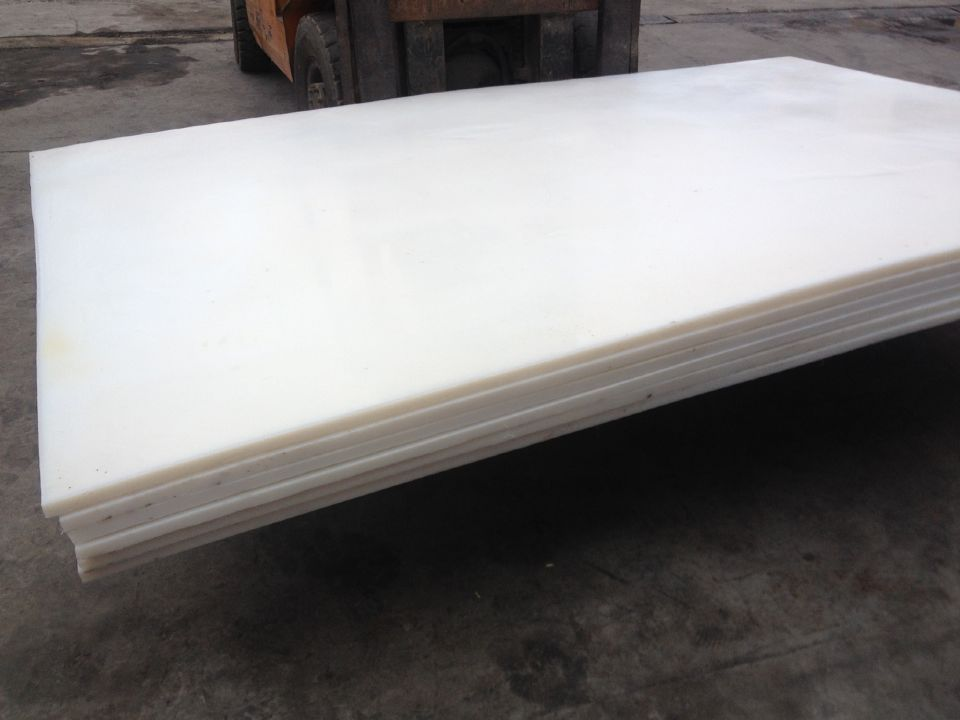
Selecting HDPE sheet thickness for industrial fabrication is not only a material question. In many projects, thickness affects rigidity, fabrication difficulty, service life, transport, installation, and total project cost.
A sheet that is too thin may deform under load, warp during fabrication, or provide limited long-term stability. A sheet that is too thick may increase material cost, add unnecessary weight, and make cutting, bending, and welding less efficient. For industrial buyers, the right choice usually depends on the actual application rather than a fixed thickness preference.
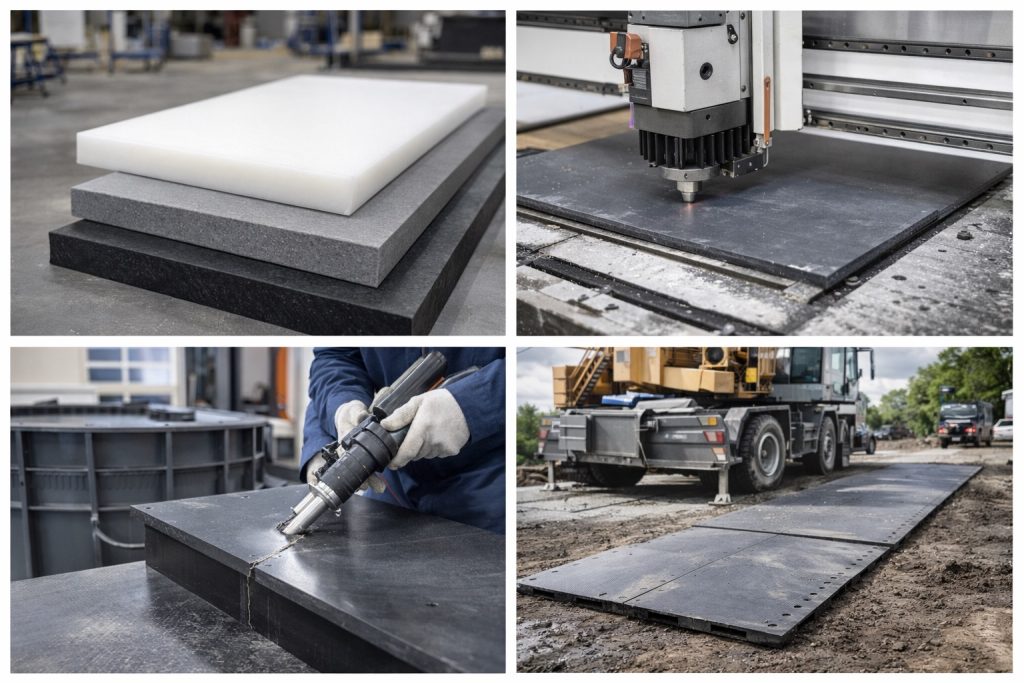
Start with the Actual Fabrication Purpose
Before choosing thickness, the first step is to define what the HDPE sheet will be used for.
In industrial fabrication, HDPE sheets may be used for:
- tank lining
- chemical containment parts
- protective wall panels
- machine guards
- wear plates
- chute liners
- water treatment components
- ground protection boards
- custom fabricated industrial parts
Different uses require different thickness logic. A flat cover panel, a welded box structure, a lining part, and a load-bearing fabricated component should not be selected in the same way.
Thickness Should Match Structural Demand
One of the main reasons for thickness selection is stiffness.
HDPE has good chemical resistance and impact resistance, but compared with metal, it is more flexible. If the sheet is too thin for the span, support condition, or working load, bending or deformation may appear during use.
In practical purchasing, thicker sheets are usually considered when the fabricated part involves:
- larger unsupported spans
- higher mechanical load
- repeated impact
- long-term outdoor installation
- higher deformation risk
- heavy-duty fabricated structures
For lighter-duty applications such as liners, covers, separators, or cut parts with sufficient support, thinner sheets may already be suitable.
Consider Whether the Sheet Will Be Cut, Bent, or Welded
Thickness also affects how the material is processed in the factory.
In industrial fabrication, HDPE sheets may go through:
- CNC cutting
- saw cutting
- drilling
- routing
- hot bending
- butt welding
- extrusion welding
- assembly into tanks, guards, or custom units
As thickness increases, fabrication usually becomes slower and more demanding. Thicker boards may require more machining time, higher welding input, and more attention to dimensional control.
This does not mean thicker is a problem. It means buyers should choose thickness based on both service condition and fabrication method. If the design requires extensive welding or formed structures, the selected thickness should remain practical for production, not only strong on paper.
Check the Working Environment
The service environment matters as much as the drawing.
HDPE sheet thickness should be reviewed together with:
- operating load
- contact pressure
- span or panel size
- support spacing
- impact frequency
- chemical exposure
- temperature conditions
- indoor or outdoor use
For example, a sheet used as a simple chemical-resistant liner may not need the same thickness as a fabricated HDPE panel used in a heavy-duty handling area. A part exposed to repeated force or movement may need more thickness than a static enclosure panel.
If the application includes outdoor exposure, large temperature variation, or continuous mechanical stress, thickness should be checked more carefully from a long-term stability perspective.
Do Not Choose Thickness by Price Alone
In bulk purchasing, thin sheets often look more attractive in quotation comparisons because the initial material cost is lower.
However, selecting thickness only by price can create problems later:
- reduced rigidity
- shorter service life
- more deformation during use
- fabrication limitations
- higher replacement frequency
- customer complaints after installation
A better purchasing approach is to compare thickness against total project use, not only board price per sheet. In many industrial orders, a slightly thicker HDPE sheet may reduce risk and improve fabrication reliability, which matters more than small savings in raw material cost.
Standard Thickness Is Not Always the Best Choice
Many buyers begin with standard board availability, which is practical, but standard thickness should not automatically decide the final order.
For fabrication projects, the better approach is to review:
- actual use
- drawing requirement
- expected load
- fabrication structure
- welding layout
- installation condition
- quantity and shipment plan
If the project is custom fabricated, the right thickness should follow application logic first, then match available production and export arrangement.
Thickness Selection Should Also Consider Sheet Size
Thickness and sheet size should be reviewed together.
A large HDPE sheet panel may behave differently from a smaller cut part, even at the same thickness. When the part becomes wider or longer, stiffness demand may increase. That is why thickness selection should not be separated from final part dimensions.
In quotation discussions, buyers should provide:
- full part size
- sheet size if known
- drawing if available
- support method
- intended use
- whether welding or bending is required
This helps the supplier recommend a more practical HDPE sheet thickness for industrial fabrication instead of giving only a generic board quotation.
Common Mistakes When Choosing HDPE Sheet Thickness
Several problems appear repeatedly in industrial sheet orders.
Choosing thickness only by habit
Some buyers reorder the same thickness from older projects without checking whether the new application is actually the same.
Ignoring support conditions
A sheet may perform well when fully supported but behave very differently when used across larger spans.
Focusing only on sheet cost
Lower board price does not always mean lower project cost if the material becomes less reliable in service.
Sending incomplete RFQ information
Without application details, drawing, load information, or fabrication method, thickness recommendations are often too general.
Over-specifying thickness unnecessarily
In some projects, excess thickness increases cost and production difficulty without creating meaningful performance benefit.
What Information Helps a Factory Recommend the Right Thickness
If the buyer wants a more useful quotation or suggestion, it is better to send practical project information instead of only asking for “HDPE sheet price.”
Useful information includes:
- application
- required size
- thickness range if known
- quantity
- drawing
- whether cutting, drilling, welding, or bending is needed
- working environment
- load or support condition
- destination country
This is especially important for custom HDPE sheet fabrication, where the sheet is not only sold as raw material but also processed into finished industrial parts.
Conclusion
Choosing HDPE sheet thickness for industrial fabrication should be based on use condition, panel size, structural demand, fabrication method, and long-term service requirements. The right thickness is not always the thinnest option or the thickest option. It is the one that fits the actual project without creating unnecessary risk or cost.
For quotation, it is better to send the application, size, quantity, drawing, and fabrication requirement together, so the supplier can recommend a more practical HDPE sheet solution for your project.
FAQ
What is the common HDPE sheet thickness range for industrial fabrication?
The suitable range depends on the application. Industrial fabrication may use thinner sheets for liners and covers, while welded structures, guards, wear parts, or load-related applications often require thicker boards.
How to choose HDPE sheet thickness for welded tanks or fabricated parts?
Thickness should be checked together with part size, support structure, welding method, and service condition. For welded fabrication, the material should meet both structural demand and production practicality.
Is thicker HDPE sheet always better for industrial use?
No. Thicker sheets may improve rigidity in some applications, but they also increase weight, cost, and fabrication difficulty. The correct choice depends on actual use.
Does sheet size affect HDPE thickness selection?
Yes. Larger panels usually require more attention to stiffness and support condition. Thickness should not be selected without considering final dimensions.
What details should be sent before requesting an HDPE sheet quotation?
It is better to send material requirement, thickness, size, quantity, application, drawing, fabrication process, and delivery destination. This helps the supplier provide a more accurate quotation and recommendation.