Current Language
    Change Language

    HDPE vs PP vs PE: Which Plastic Sheet Should You Choose?

    2026-05-06

    share:

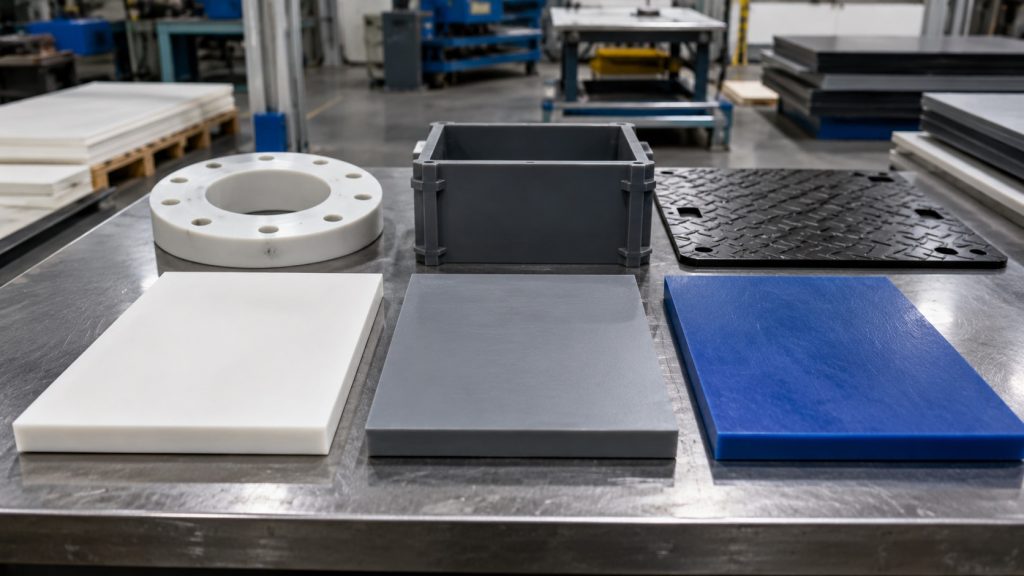
    Choosing the right plastic sheet is not only about comparing prices. In industrial fabrication, chemical equipment, environmental systems, ground protection, and machined plastic parts, the material must match the real working conditions. HDPE, PP, and PE sheets may look similar at first, but they perform differently in rigidity, impact resistance, chemical resistance, welding performance, outdoor use, and long-term stability.

    For project buyers, equipment manufacturers, and fabrication workshops, the best choice usually depends on four questions: where the sheet will be used, what it will contact, how it will be processed, and how long it needs to perform.

    Shengliang Plastic supplies HDPE sheets, PE sheets, PP sheets, PPH sheets, FRPP boards, ground protection mats, PP / PPH tanks, and custom PE / PP machined parts for industrial, chemical, environmental protection, water treatment, construction, machinery, agriculture, and marine applications. This product range allows buyers to compare different plastic sheet materials based on actual project requirements instead of choosing one material blindly.

    Understanding the Basic Difference

    HDPE, PP, and PE are all common thermoplastic materials. They are lightweight, corrosion-resistant, easy to process, and widely used in industrial fabrication. However, each material has its own stronger application area.

    HDPE sheet is a high-density polyethylene sheet. It offers good impact resistance, low water absorption, chemical resistance, and stable performance in many outdoor, wet, and industrial environments.

    PE sheet usually refers to polyethylene sheet in a broader sense. Compared with PP, PE is generally more flexible and impact-resistant. It is often used for liners, protective boards, wear surfaces, cutting surfaces, and general fabricated parts.

    PP sheet is polypropylene sheet. It is usually more rigid than PE and has good chemical resistance. It is commonly used for tanks, ducts, scrubbers, pickling systems, ventilation parts, water treatment equipment, and other welded chemical or environmental protection structures.

    In simple terms, HDPE is often chosen for toughness and outdoor durability, PE is useful when flexibility and impact resistance matter, and PP is preferred when rigidity, welding, and chemical equipment fabrication are more important.

    HDPE Sheet: Best for Impact, Moisture, and Outdoor Use

    HDPE sheet is a practical choice when the project requires toughness, moisture resistance, and easy machining. It performs well in wet environments and has low water absorption, making it suitable for liners, outdoor boards, machined parts, ground protection mats, marine panels, and protective surfaces.

    For construction and temporary access projects, HDPE ground protection mats are often used to protect soft ground, grass, concrete surfaces, and working areas from vehicle or machinery damage. The material is reusable, impact-resistant, and suitable for repeated site use.

    HDPE sheets are also suitable for CNC cutting, drilling, routing, welding, and cut-to-size processing. This makes them useful for equipment covers, support plates, machine parts, guide components, protective panels, and custom plastic workpieces.

    HDPE is a good choice when the project needs:

    • High impact resistance
    • Low water absorption
    • Outdoor or wet-area performance
    • Ground protection or surface protection
    • Cut-to-size plastic boards
    • CNC-machined PE / HDPE parts
    • Liners, covers, panels, and protective components

    For buyers who need HDPE sheets for road boards, ground protection mats, liners, outdoor panels, or machined components, the key details to confirm are thickness, surface texture, load condition, UV requirement, sheet size, and machining drawings.

    PP Sheet: Best for Chemical Equipment and Welded Structures

    PP sheet is often selected for chemical equipment and environmental protection systems because it has good chemical resistance, stable rigidity, and strong suitability for welded fabrication. Compared with PE, PP is usually stiffer and better suited for structures that need to keep their shape under normal working conditions.

    In industrial projects, PP and PPH sheets are commonly used for tanks, pickling equipment, spray towers, scrubbers, ventilation ducts, water treatment systems, inclined plate settlers, three-phase separators, and other fabricated equipment.

    PP sheet is also suitable for hot-melt welding and processing into custom equipment. When a project requires a tank body, duct section, baffle, flange, cover, channel, or welded assembly, PP or PPH is often more suitable than standard PE.

    PP sheet is a good choice when the project needs:

    • Chemical resistance
    • Rigid sheet structure
    • Welded tanks or equipment
    • Ventilation and exhaust systems
    • Water treatment or environmental equipment
    • Pickling tanks, scrubbers, and spray towers
    • Drawing-based PP / PPH fabricated components

    For buyers, the important details include chemical medium, concentration, operating temperature, tank size, welding structure, working pressure if applicable, reinforcement design, and installation environment.

    PE Sheet: Best for Flexible Protection and General Fabrication

    PE sheet is a broad and practical material category. Compared with PP, PE usually has better flexibility and impact toughness. It is commonly used where the sheet needs to absorb impact, protect surfaces, reduce wear, or work as a general-purpose industrial board.

    PE sheets can be used as liners, cutting boards, protective boards, anti-slip panels, wear surfaces, road mats, marine panels, and custom plastic parts. For many general industrial and construction uses, PE provides a cost-effective balance between durability, machinability, and practical service life.

    PE sheet is a good choice when the project needs:

    • Flexible plastic board material
    • Impact-resistant protective panels
    • General liners and wear surfaces
    • Cutting surfaces or working boards
    • Custom machined plastic parts
    • Protective boards for machinery or construction
    • Indoor and outdoor fabricated components

    For custom PE parts, buyers should provide drawings, samples, thickness requirements, surface requirements, hole positions, and working conditions. This helps the factory confirm whether standard PE, HDPE, or another polyethylene grade is more suitable.

    HDPE vs PP vs PE: Quick Selection Guide

    MaterialMain AdvantageBest Used ForPoints to Confirm Before Ordering
    HDPE SheetToughness, impact resistance, moisture resistanceGround protection mats, liners, outdoor panels, machined parts, protective boardsThickness, surface texture, UV requirement, load condition, machining details
    PP SheetRigidity, chemical resistance, welding suitabilityTanks, ducts, scrubbers, pickling systems, water treatment equipment, welded structuresChemical medium, temperature, welding design, tank size, fabrication drawings
    PE SheetFlexibility, impact resistance, general processingLiners, protective boards, cutting surfaces, wear panels, general plastic partsSheet grade, thickness, surface finish, cutting size, application environment

    When Should You Choose HDPE Instead of PP?

    Choose HDPE when the application needs better impact resistance, moisture resistance, outdoor durability, or ground protection performance. HDPE is often better for protective mats, outdoor panels, marine-related parts, liners, machine covers, and cut-to-size industrial boards.

    If the part needs to handle repeated impact, outdoor exposure, wet conditions, or machinery movement, HDPE is usually more practical than PP.

    However, if the part is part of a chemical tank, scrubber, duct, or welded equipment structure, PP or PPH may be more suitable.

    When Should You Choose PP Instead of HDPE?

    Choose PP when the project requires a more rigid plastic sheet for chemical equipment, welded tanks, ventilation structures, or environmental protection systems. PP is often used where sheet stiffness, weldability, and chemical resistance are more important than impact flexibility.

    PP is especially suitable for fabricated equipment such as tanks, spray towers, pickling tanks, air ducts, separators, and water treatment structures.

    For chemical projects, buyers should not choose only by material name. The chemical type, concentration, temperature, contact time, structure design, and welding quality all affect the final service life.

    When Should You Choose PE Instead of PP?

    Choose PE when the project needs a more flexible and impact-resistant sheet for general protection, lining, cutting, or surface applications. PE is usually easier to use where the board needs toughness rather than high structural rigidity.

    PE sheets are suitable for many general industrial boards, protective panels, wear surfaces, liners, and machined parts. If the working condition becomes heavier, more outdoor-focused, or requires higher density and strength, HDPE may be the better option within the polyethylene family.

    Why Custom Fabrication Matters

    For industrial buyers, the material sheet is often only the first step. Many projects also require cutting, drilling, welding, CNC machining, bending, assembly, or drawing-based fabrication.

    A factory that can supply both plastic sheets and processed components can help reduce communication problems between sheet supply and local fabrication. This is especially useful for PP / PPH tanks, PE / PP machined parts, HDPE ground protection mats, and custom plastic components.

    Typical custom requirements include:

    • Cut-to-size sheets
    • CNC-machined PE / PP parts
    • Drilled holes and slots
    • Custom thickness and colors
    • Smooth, textured, matte, or anti-slip surfaces
    • PP / PPH welded tanks and equipment
    • Plastic flanges, covers, baffles, brackets, and channels
    • Ground protection mats with specific size and surface design
    • Drawing-based fabrication for industrial projects

    When the project involves repeated orders, custom fabrication also helps maintain consistent dimensions, material grade, surface finish, and installation quality.

    What Buyers Should Prepare Before Asking for a Quote

    To choose the right plastic sheet and receive an accurate quotation, buyers should prepare the following details:

    Application
    Explain whether the sheet will be used for tanks, liners, panels, road mats, machined parts, chemical equipment, water treatment systems, or construction protection.

    Working environment
    Confirm indoor or outdoor use, wet conditions, chemical contact, UV exposure, impact level, and cleaning process.

    Material requirement
    State whether HDPE, PE, PP, PPH, or FRPP is required. If unsure, provide the application details and ask for material recommendations.

    Size and thickness
    Provide sheet thickness, length, width, tolerance, quantity, and whether cut-to-size service is needed.

    Processing drawings
    Send drawings or samples if CNC cutting, drilling, welding, bending, or equipment fabrication is required.

    Surface and color
    Confirm smooth, textured, matte, anti-slip, or two-color surface requirements, as well as color preferences.

    Packaging and delivery
    Confirm export packing, pallet requirements, destination country, and delivery schedule.

    Clear project details allow the manufacturer to recommend a suitable material instead of simply quoting the cheapest plastic sheet.

    Final Recommendation

    There is no single plastic sheet that is best for every project. HDPE, PP, and PE each have different advantages.

    Choose HDPE sheet when impact resistance, moisture resistance, outdoor use, ground protection, and machined plastic parts are important.

    Choose PP sheet when chemical resistance, rigidity, welding, tanks, ducts, scrubbers, and environmental equipment fabrication are the main requirements.

    Choose PE sheet when the project needs flexible, impact-resistant, general-purpose plastic boards for liners, protective panels, cutting surfaces, or fabricated parts.

    For industrial projects, the safest choice is to match the material with the real working environment, processing method, and service expectations. Shengliang Plastic supplies HDPE sheets, PE sheets, PP sheets, PPH sheets, FRPP boards, HDPE ground protection mats, PP / PPH equipment, and custom PE / PP machined parts. Buyers can send application details, drawings, sheet size, thickness, quantity, and destination information to receive a suitable material recommendation and factory quotation.

    Recommended post

    Get A Quote

    Gain a deeper understanding of the product

    Free to contact us